Background

THE COMPLETE JUMP ROPE GUIDE

LEARN PROPER FORM AND TIMING CORRECTLY.

JUMP ROPE SELECTION

Optimizing your hardware: Match the rope's weight and drag to your specific training objective.

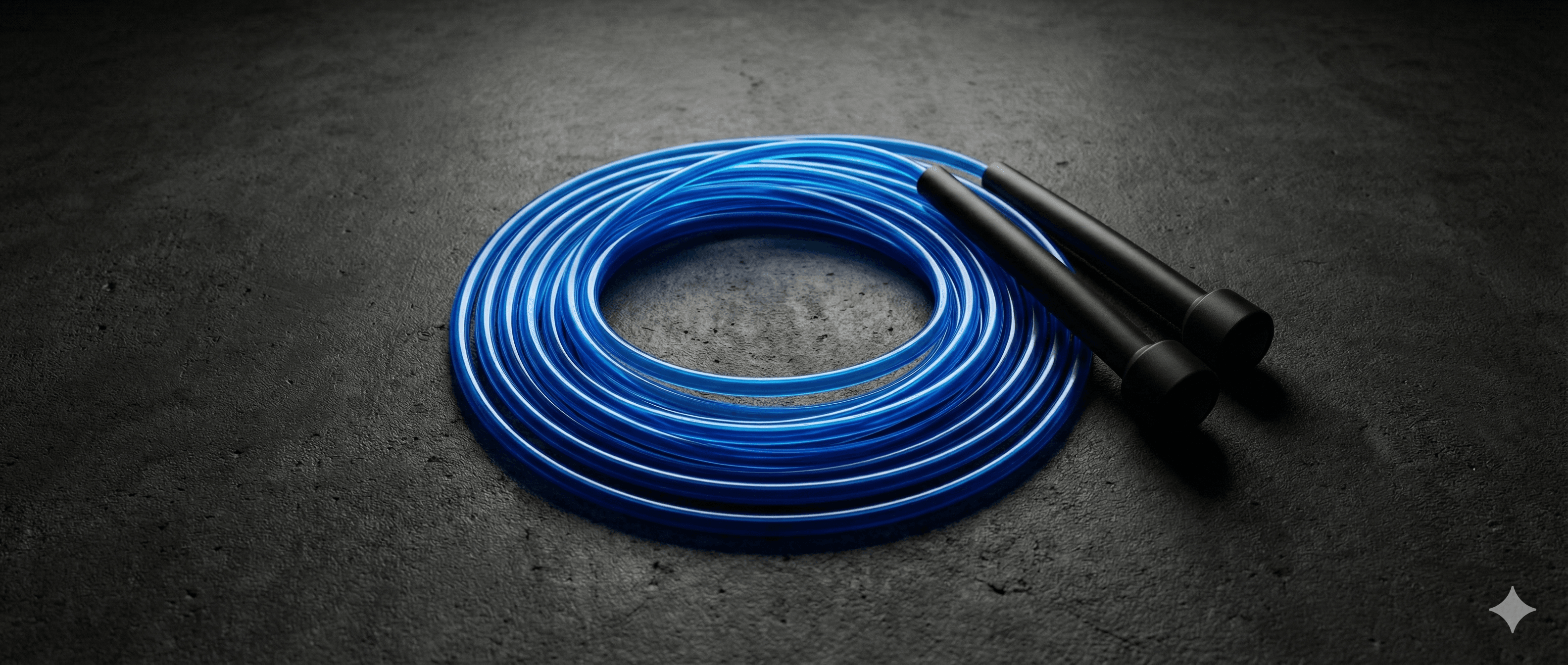
  • BEST FOR SPEED & CARDIO (PVC Speed Rope) - The best jump rope for Double-Unders, Boxing Footwork, HIIT Cardio
    PVC Speed Rope Visualization
    BEST FOR SPEED & CARDIO

    PVC Speed Rope - BEST FOR SPEED & CARDIO for Double-Unders, Boxing Footwork, HIIT Cardio

    Biomechanics
    Aero-dynamic Stability. The 5mm solid PVC core generates consistent centripetal force at high RPM (100+), providing the tactile threshold required for sub-millisecond timing without drag-induced fatigue.
    Best For
    Double-Unders, Boxing Footwork, HIIT Cardio
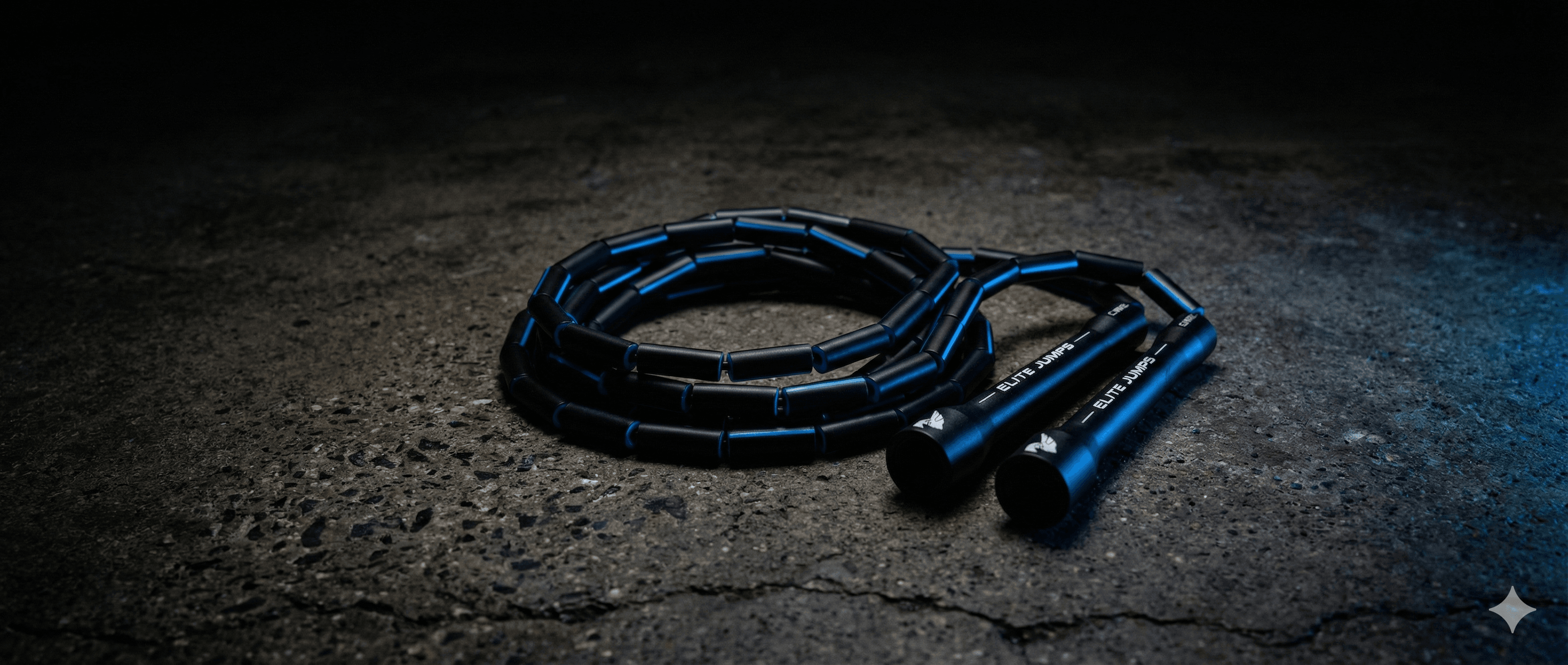
  • BEST FOR TRICKS & FEEDBACK (Segmented Beaded Rope) - The best jump rope for Beginners, Mic Releases, Freestyle Tricks
    Segmented Beaded Rope Visualization
    BEST FOR TRICKS & FEEDBACK

    Segmented Beaded Rope - BEST FOR TRICKS & FEEDBACK for Beginners, Mic Releases, Freestyle Tricks

    Biomechanics
    Audio-Tactile Feedback Loop. High-density shatterproof beads increase drag coefficient and produce a distinct auditory 'click' on impact. This multi-sensory input significantly accelerates the motor learning phase for complex coordination.
    Best For
    Beginners, Mic Releases, Freestyle Tricks
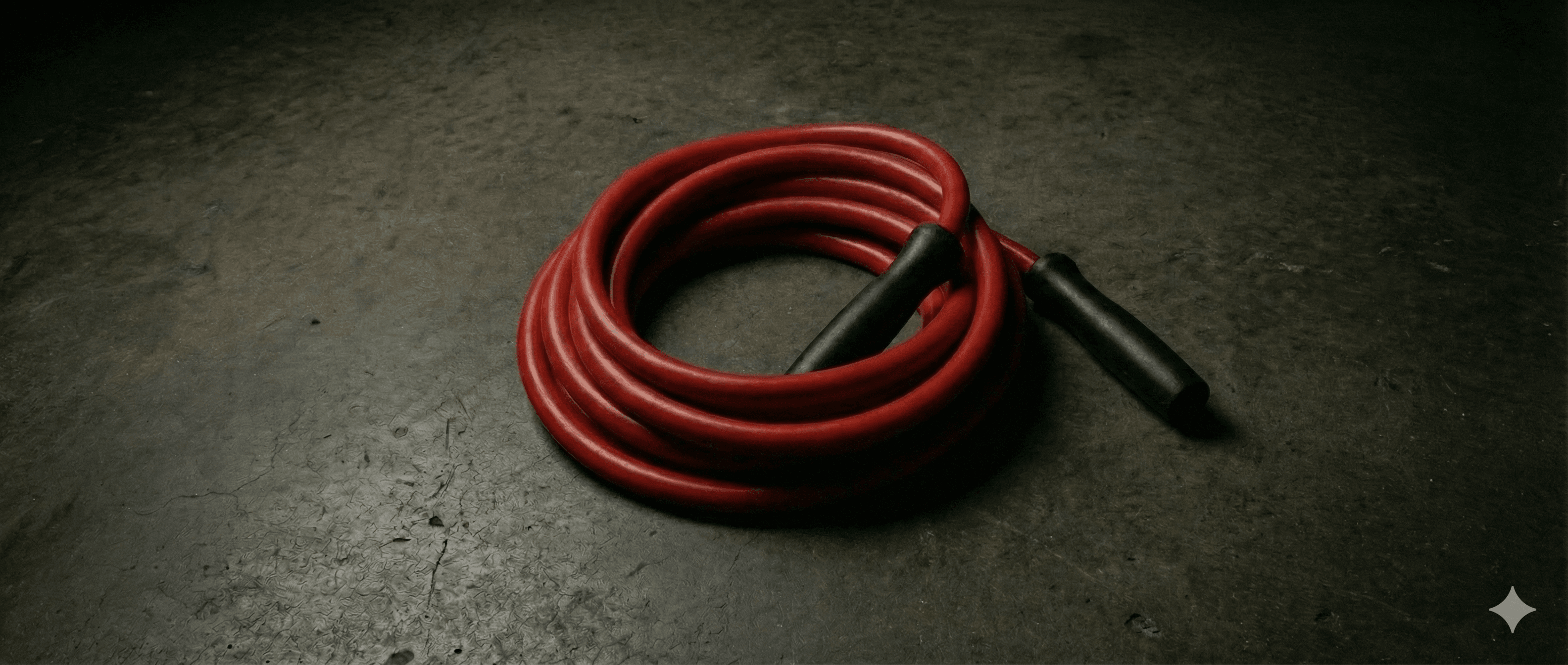
  • BEST FOR STRENGTH (Weighted Heavy Rope) - The best jump rope for Muscle Endurance, Grip Strength, Anaerobic Conditioning
    Weighted Heavy Rope Visualization
    BEST FOR STRENGTH

    Weighted Heavy Rope - BEST FOR STRENGTH for Muscle Endurance, Grip Strength, Anaerobic Conditioning

    Biomechanics
    Rotational Load Bearing. The 1lb+ mass increases rotational inertia, forcing the recruitment of the rotator cuff, deltoids, and brachioradialis to stabilize the arc, converting the movement into kinetic chain resistance training.
    Best For
    Muscle Endurance, Grip Strength, Anaerobic Conditioning
Mechanical Failure Analysis

Why You Keep Tripping

90% of tripping errors are mechanical, not physical. They stem from incorrect rope length. Before you blame your footwork, check your hardware.

X

Signs it is Too Long

Excessive slack creates "Aerodynamic Drag." The rope hits the floor too early, bouncing up and delaying the rotation. This destroys your timing.

X

Signs it is Too Short

Insufficient clearance. The rope clips your toes or head. You are forced to hunch over or tuck your arms to make it fit, ruining your posture.

The Sweet Spot

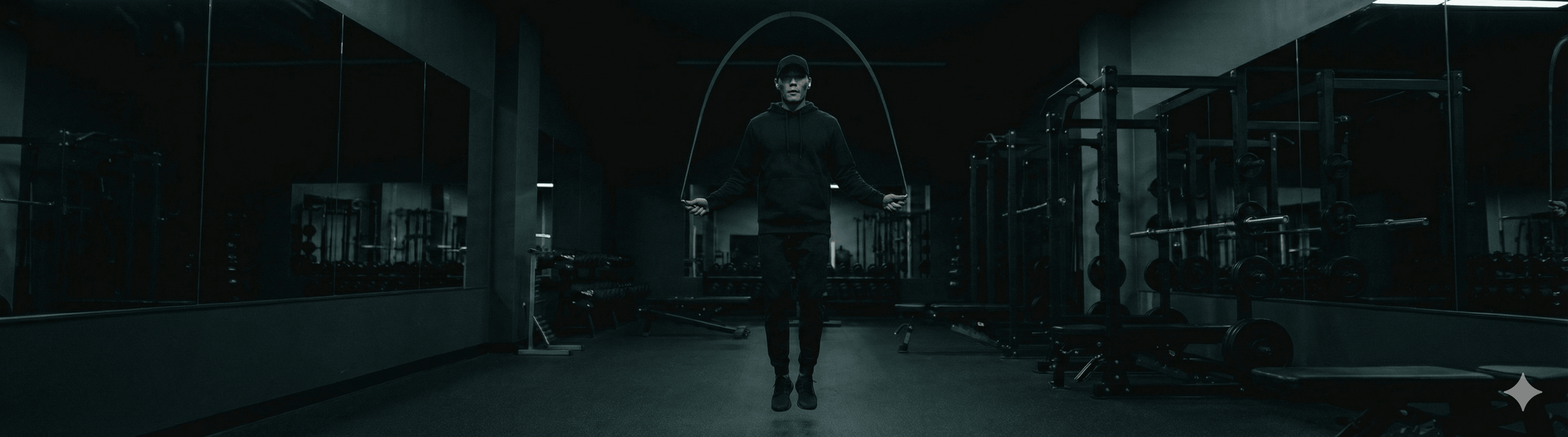
Effortless Biomechanics. The rope grazes the floor with a light "tick." You stand tall, elbows back, with the rotation controlled purely by wrist torque.
How to Measure & Cut

OFFICIAL SIZING STANDARD
  1. 01
    THE SETUP

    POSITION THE ROPE

    Hold handles, cord on floor.

  2. 02
    FIND THE MIDPOINT

    STEP ON THE CENTER

    One foot on the midpoint.

  3. 03
    THE ARMPIT RULE

    CHECK THE HEIGHT

    Pull handles up. End of handle should reach the ARMPIT.

  4. 04
    VERIFY SYMMETRY

    EQUALIZE

    Ensure left and right sides are even.

  5. 05
    REMOVE EXCESS WEIGHT

    CUT THE EXCESS

    Cut exactly at the armpit mark.

Critical Warning: Do not hide excess cord in the handles. It increases internal friction. Cut it.

The Algorithm

THE "FIRST 10 MINUTES" PROTOCOL

Immediate gratification. The user has the tool, now here is the manual.

  1. 01

    The Drop

    Put the rope down. Seriously. Step away from it. Your brain needs to learn the jump mechanics without the anxiety of the object.

  2. 02

    The Shadow

    Jump without the rope. Tap your thighs twice at the peak of your jump. This programs the timing of your wrist rotation.

  3. 03

    The Grip

    Pick it up. Hold it like a remote control, not a hammer. Thumbs on top. This unlocks wrist rotation versus shoulder rotation.

WHY DID I JUST TRIP?

The Pinky Drift occurs when your pinky finger drifts away from the handle. This breaks the "lever arm" of your wrist, causing the rope to shorten effectively and catch your toes. Keep a firm grip with all fingers to maintain length.
The Asymmetric Tuck happens when one arm is tucked closer to your body than the other. This creates an uneven arc, where the rope hits the ground on one side but clips your foot on the other. Look in a mirror or record yourself to ensure symmetry.

THE NEURO-PLASTICITY SPIKE

Why 5 minutes of complex patterns beats 30 minutes of jogging for brain health.

Jogging is linear. Jump rope is computational. Every revolution requires your brain to calculate velocity, trajectory, and timing in milliseconds. This forces rapid neural firing and creates new synaptic connections. It's not just a workout; it's a cognitive upgrade.

Start the upgrade